

Prior to addressing the sustainable balanced plain model, it would be prudent to summarize the country's conditions in the areas of water, energy, and agricultural economics.
Where is the main problem?
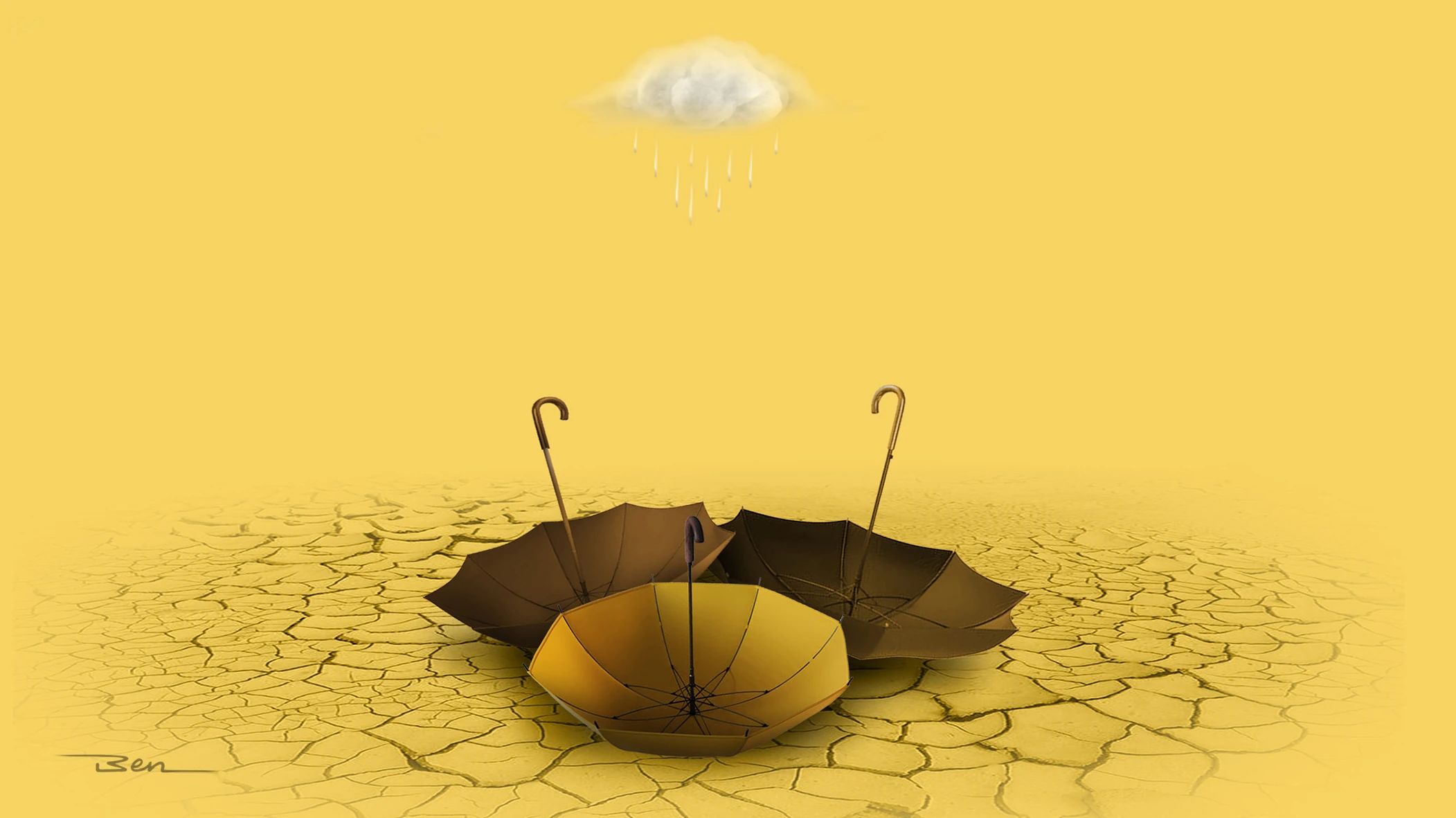
The climate of Iran is semi-arid, which, due to climate change and global warming, is on the path to becoming arid. More than 80% of water resources in Iran are allocated to agricultural use, while only 8% of the country's gross domestic product (GDP) is attributed to the agricultural sector. Annually, the groundwater level in Iran decreases by an average of 50-100 centimeters, several times the global average. In the best case, irrigation efficiency in the agricultural sector, according to the Ministry of Agricultural Jihad, is about 30 percent. In a word, we are rapidly depleting groundwater resources (our most valuable and strategic territorial asset), while the financial and economic benefits derived from this consumption are not proportional for the stakeholders in this area. Consequently, stakeholders are not inclined to reduce water and energy consumption because they do not sufficiently benefit from it.
The Many Complexities of Water Resources Management and Its Challenges
Considering the above challenges, the Sustainable Balanced Plains Model has been designed and presented, aimed at addressing these challenges and saving water:
The Sustainable Balanced Plain Model
The Sustainable Balanced Plain Model Plan was created with the understanding that, while monitoring and control tools such as meters are effective in reducing water and energy consumption, optimizing consumption is a challenge driven mainly by economic and social factors. Without considering the interests of all stakeholders and securing these interests, and without the sincere and logical acceptance of the plan by stakeholders, all activities and efforts will not lead to meaningful and sustainable improvements as they should. The solution to the challenges of water, energy, and agricultural economics is not merely control tools like meters. Instead, these tools are part of a complex, multi-stage, and multi-sector process, with many critical components not directly related to monitoring tools.
The Sustainable Balanced Plains Model Plan is based on the following fundamental axes:
Keywords of the Sustainable Balanced Plains Model:
To ensure the plan remains operational, two structures have been envisaged: the Plain Trustee and the Plain Assignee.
Water Quota Bank
The Water Quota Bank is a platform in which the annual water quota (annual permitted withdrawal volume) of each user is allocated to their well that has a valid exploitation license. On this platform, each user can review and manage the total volume of their annual water quota, including the consumed and remaining amounts, along with the start and end dates of its validity. Reviewing this information in an integrated manner allows for better and more accurate management of the water quota during irrigation and agricultural periods. In addition to viewing their annual water quota, users can also monitor the total water quota allocated to all wells in the plain. This transparency of information in the bank will increase the trust and responsibility of water users towards groundwater resources, resulting in savings and increased productivity.
Water Quota Market
After the establishment of the Water Quota Bank, in accordance with the executive procedures developed for the bank, users receive their annual water quota through the Water Quota Bank. In accordance with a valid exploitation license, users are given permission to withdraw and consume this water quota. This permission to withdraw from groundwater resources can be transferred from one user to another under certain conditions. This process takes place in the form of a water quota transfer contract concluded between the buyer and the seller, in a platform called the "Water Quota Market." Those users who wish to participate in the market are guided by local facilitators to familiarize themselves with the conditions for entering the water quota market and its benefits. If the necessary conditions (such as proof of productivity) are met, they can enter the market.
Transparent Plains Information Bank
The Transparent Plains Information Bank is a platform for self-declaration and verification of information and data in the agricultural sector, including equipment and machinery, methods, products produced, etc. This bank will be a comprehensive database for collecting information on the exploitation and agriculture of a plain.
A summary of the exploitation license status, geographical location, name and access information, legal representative of the operator, current well status, latest water withdrawal information, date and name of the last approving officer, status of measuring devices, as well as the current type of water use, surface and type of crop under cultivation (in the case of agricultural wells) will be gradually completed in this bank and will be disclosed in a step-by-step manner, while complying with the principle of protecting the applicants' personal information. The purpose of creating the Transparent Plains Information Bank is to gain the trust and participation of all stakeholders and users of water resources, and to aggregate the status of water resources and withdrawals in each plain.
The transparent database platform of the plain will lead to diverse, multifaceted networking and will connect an ecosystem of businesses. In this platform, the farmer states how much water and energy he has consumed in order to produce a specific quantity and quality of product. As a result, businesses in the fields of irrigation and agricultural consulting, fertilizers, pesticides, agricultural machinery, and agricultural product retail will network and interact with the farmer and with each other. This will gradually result in the formation of a large ecosystem of related businesses, creating significant economic and social benefits for all stakeholders.
Plain Trustee
The Plain Trustee will train and empower local experts under the supervision of the government. These trusted experts of provincial regional water companies will be selected to monitor the implementation of the provisions of the exploitation license and other legal obligations of the operators. Each water user, in the form of a specific contract with one of the water trustees, will receive confirmation of compliance with the exploitation license (including the accuracy of measuring the volume of water withdrawn, the accuracy of well installations, compliance with the cultivation pattern stated in the license, compliance with consumption standards, etc.) and submit it to the Plain Assignee.
Monitoring the accuracy of the report of the water trustees will be the responsibility of the Plain Assignee office and the regional water company. A report of a possible violation by the water trustee, prepared by the Plain Assignee, any of the users, or government inspectors, will result in disciplinary action against the Plain Trustee by the regional water company.
Plain Assignee
The mechanism of the water rights bank and market is carried out by the broker, which was established to create transparency in information and gain the trust of stakeholders and users. In addition to managing the bank and the water market, the Plain Assignee is responsible for collecting consumption reports, reviewing and monitoring the reports of the water trustees, and similar tasks. The Plain Assignee, under the supervision of the government, implements the schedule for complying with the standard for the withdrawal of renewable water volumes in the plain, in cooperation with all stakeholders.
The Plain Assignee is a legal entity that operates in direct interaction with the users and the government within its area.

The implementation mechanism of the Sustainable Balanced Plain Model is designed in such a way that agricultural users can cede a percentage of their annual water consumption quota if they increase water consumption efficiency and improve agricultural infrastructure, while maintaining the cultivated area. The applicants for purchasing this water quota are the industrial and agricultural sectors (which have higher consumption efficiency). This process will lead to the provision of water for new needs, improving the livelihoods of farmers, and as a result, improving irrigation and agricultural infrastructure and reducing pressure on existing groundwater resources. This plan fairly considers the interests of both farmers and industries, thereby increasing trust among watershed stakeholders.

